
Hello Friends,
I hope most of you enjoyed a shopping spree during this festive season and scored some great discounts. Did you notice how “AI” seems to be everywhere? It’s on nearly every product label, whether it’s an iPhone, a refrigerator, a TV, a laptop, and more. But are these products truly AI-powered or just using the term as a marketing buzzword?
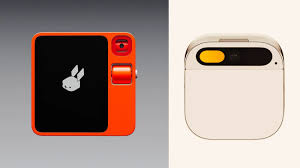
A new category of gadgets entering the field is AI-powered hardware like the Rabbit R1 and Humane AI Pin. These devices have created quite a buzz in the tech community. It’s amazing that 10,000 Rabbit R1 units were sold within 24 hours of launch! Investors are equally excited, funding these AI hardware companies generously. Tab, a startup led by Avi Schiffmann, recently secured $1.9 million in seed funding at a nearly $20 million valuation for its wearable AI assistant. Similarly, the Humane AI Pin raised an impressive $240 million. Exciting, right? Nonetheless, despite the hype, user feedback on these devices has been mixed, if not poor. In this post, let’s explore the hype vs. the reality of these products—starting with a look at what AI hardware really is.
What is AI Hardware?
AI hardware devices are designed to offer users a hyper-personalized, intuitive experience. Think of it as a digital assistant that’s always with you. It can send messages, book tickets, or even offer friendly advice. What makes AI hardware unique is its focus on natural, conversational interactions, unlike smartphones where you need to open apps. So if you want to listen to music, you can simply ask your device, and it will play your personalized playlist. Simple, smooth, and convenient!
How Do They Work?
AI hardware devices use a combination of microphones, sensors, cameras, and on-device processing to carry out tasks. They’re also connected to cloud-based Large Language Models (LLMs) and Large Action Models (LAMs), which analyze the data to deliver responses tailored to the user’s needs. Essentially, they listen to conversations, watch surroundings, and detect behavioral cues to offer real-time, unique, and personalized insights. This creates an experience more contextual than current smartphone apps.
What’s Missing?
Despite packed town halls and promising demos from CEOs, many users feel that today’s AI hardware feels half-baked, with most desirable features still in development. The main concerns users have with these devices include:
- Inconsistency in voice and gesture-based interfaces – These devices often struggle with voice recognition in noisy environments or fail to accurately interpret gestures, making interactions frustrating rather than seamless.
- Battery life – AI devices are meant to be carried throughout the day, frequent recharging disrupts their convenience.
- Limited functionality – Functionality of AI hardware remains limited compared to smartphones. Tasks that would take seconds on a smartphone can feel clunky on AI hardware, especially for complex actions.
- Limited actions – At present, these devices often fall back to only giving suggestions rather than autonomously completing tasks, an ability that AI platforms like ChatGPT or Gemini already manage quite well.
- Privacy concerns – Privacy is another major concern. Continuous listening and recording, particularly in private settings, makes many users uneasy, despite assurances about data security. Continuous cloud connectivity also raises questions about how securely personal information is stored and handled.
Future of AI Hardware
The future of AI hardware is promising, though uncertain and filled with challenges. A big question is whether these devices hold enough value to exist as standalone gadgets or if their functions could simply be an app. We already have powerful assistants like Siri, Alexa, and Google Assistant, built into our smartphones and home systems. So, isn’t it a task to carry yet another gadget, unless it offers unique, irreplaceable benefits.
For these devices to gain widespread adoption, they need to address genuine, valuable use cases that a smartphone app alone can’t handle. For example, AI hardware could excel in scenarios where real-time, context-aware assistance is crucial. Imagine an AI device capable of diagnosing car issues on the spot or guiding emergency responders with hands-free, step-by-step assistance in critical situations. Similarly, for avid travelers, these devices could act as real-time cultural and language guides, offering guidance on etiquette or helping adjust tone when speaking in another language. Such applications go beyond convenience, delivering value that a typical smartphone or app may not match.
However, if these devices continue focusing on tasks that are easily achieved with current apps or voice assistants, they may stay niche products, attracting mainly early adopters rather than becoming essential mainstream tools.
So that’s all for this post! Please let me know your thoughts and, if you’ve tried any of these devices, share your experiences. See you soon in the next post. Until then, stay healthy and blessed!

 AN IT DIARY of AI, Windows, MEM & PowerShell
One thought on “AI Hardware: Hype vs Reality”